
Residential vs Commercial Glass: What’s the Real Difference?
Glass is one of the most versatile materials used in modern buildings. From bright living rooms and elegant shower enclosures to large storefronts and office facades, glass helps create spaces that feel open, attractive, and functional. However, while glass may look similar from one building to another, the products used in residential and commercial applications are often very different.
Many homeowners and business owners assume that all glass serves the same purpose, but that’s not the case. Residential and commercial glass are designed to meet different performance requirements, safety standards, and design goals. Understanding these differences can help you choose the right solution for your property and avoid costly mistakes down the road.
At M&T Glass, one of the most common questions we receive is whether residential and commercial glass can be used interchangeably. The answer depends on the project, but in most cases, each type of glass is specifically engineered for its intended environment.
Let’s take a closer look at the real differences between residential and commercial glass and why they matter.
1. Different Purposes, Different Priorities
The biggest difference between residential and commercial glass starts with its purpose.
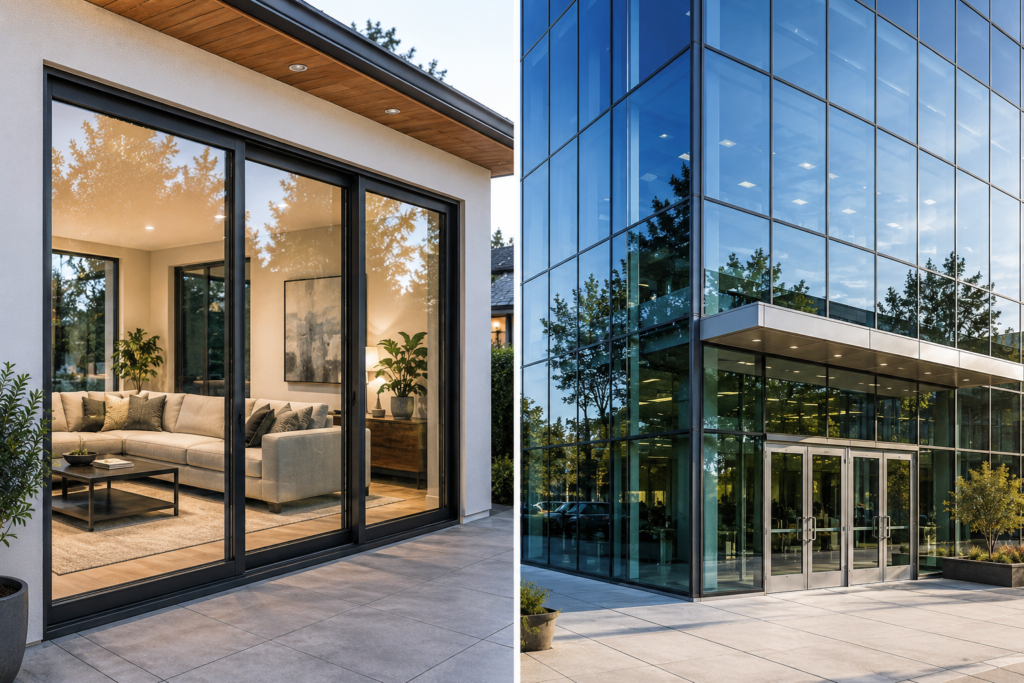
Residential glass is primarily designed to improve everyday living. Homeowners often look for solutions that enhance comfort, energy efficiency, privacy, and the overall appearance of their home. Whether it’s a large living room window or a custom shower enclosure, the focus is usually on creating a comfortable and attractive space.
Commercial glass serves a different purpose. It is designed to support business operations while providing durability, safety, and a professional appearance. Office buildings, retail stores, restaurants, and commercial properties often experience much heavier use than residential spaces.
- Comfort
- Energy efficiency
- Natural light
- Privacy
- Style and curb appeal
- Durability
- Security
- Safety compliance
- Professional appearance
- Long-term performance
Because these priorities differ, the glass products used in each setting are designed with specific goals in mind. A residential glass system that performs well in a home may not meet the demands of a busy commercial property.
2. Glass Thickness and Strength
One of the most noticeable differences between residential and commercial glass is its thickness and strength.
Most residential windows and doors are relatively small compared to commercial installations. As a result, residential glass often doesn’t require the same level of structural strength.
Commercial buildings frequently feature large storefronts, expansive office windows, and floor-to-ceiling glass walls. These larger installations require stronger glass systems capable of handling greater stress and environmental exposure.
Commercial glass is often built to withstand:
- Strong wind loads
- Heavy daily use
- Larger openings
- Increased impact risks
- More demanding building requirements
This additional strength helps maintain safety and performance over time. It also gives architects and designers more flexibility when creating large, modern glass features that make a strong visual impact.
3. Safety Requirements and Building Codes
Safety is important in every building, but commercial properties typically face stricter regulations.
Residential glass must comply with local building codes, especially in areas where accidental impact is more likely. Common examples include:
- Patio doors
- Shower enclosures
- Glass railings
- Areas near stairs
Commercial properties often require additional safety measures because they accommodate employees, customers, and visitors every day.
Depending on the project, commercial glass may need to meet requirements related to:
- Impact resistance
- Fire ratings
- Accessibility standards
- Emergency exits
- Structural performance
At M&T Glass, safety is always a top priority. Choosing the correct glass for the application helps ensure compliance with local codes while providing long-lasting protection for occupants.
4. Energy Efficiency Expectations
Energy efficiency has become a major consideration for both residential and commercial properties.
For homeowners, energy-efficient glass helps maintain comfortable indoor temperatures while reducing heating and cooling costs. Modern glass technologies can significantly improve the overall performance of a home’s windows and doors.
Popular residential energy-efficient options include:
- Double-pane glass
- Triple-pane glass
- Low-E coatings
- Argon gas-filled units
Commercial buildings often focus on reducing operating expenses across a much larger space. Since commercial properties frequently have extensive glass surfaces, energy-efficient glazing can have a significant impact on utility costs.
Benefits of energy-efficient commercial glass include:
- Lower energy consumption
- Improved occupant comfort
- Reduced solar heat gain
- Better overall building performance
At M&T Glass, many customers choose energy-efficient glass upgrades because they offer a practical way to improve comfort while reducing long-term energy expenses.
5. Design and Visual Appeal
Glass isn’t just functional—it also plays a major role in design.
Residential glass is often selected to enhance the beauty of a home. Homeowners use glass to create brighter interiors, improve views, and add a modern touch to their living spaces.
Popular residential applications include:
- Picture windows
- Patio doors
- Glass railings
- Decorative glass inserts
- Custom shower enclosures
Commercial properties use glass differently. Businesses often rely on glass to create a professional and welcoming atmosphere that attracts customers and supports productivity.
Common commercial applications include:
- Storefront systems
- Office partitions
- Glass entrances
- Interior glass walls
- Building facades
In both residential and commercial settings, glass has become an important design feature rather than simply a building material. The right glass can dramatically transform how a space looks, feels, and functions.
6. Security and Durability Needs
The level of security required for a residential property is often very different from that of a commercial building.
Homeowners typically want glass that protects their family while maintaining an attractive appearance. Tempered and laminated glass are popular choices because they provide added strength and safety.
Commercial properties usually require greater durability due to:
- Constant foot traffic
- Frequent door operation
- Public access
- Larger glass installations
- Increased exposure to wear and tear
Some businesses may require specialized solutions such as:
- Laminated security glass
- Impact-resistant glass
- Reinforced glazing systems
- Enhanced safety glass
At M&T Glass, we often recommend tempered or laminated glass for customers who want a balance of security, durability, and visual appeal. These options can provide additional peace of mind without compromising design.
7. Installation Complexity
Not all glass installations involve the same level of planning and expertise.
Residential projects are generally smaller and may include replacing windows, upgrading doors, or installing custom glass features. While professional installation is still important, the process is usually straightforward.
Commercial installations are often much more complex and may involve:
- Engineering reviews
- Structural assessments
- Specialized equipment
- Large installation crews
- Detailed project schedules
For example, installing a residential picture window is very different from installing an entire storefront system or a multi-story glass facade.
Commercial projects often require coordination between architects, contractors, engineers, and glass specialists to ensure everything performs as intended.
8. Maintenance and Long-Term Costs
Maintenance is another area where residential and commercial glass can differ significantly.
Homeowners generally focus on routine tasks such as:
- Cleaning glass surfaces
- Inspecting seals
- Checking hardware
- Monitoring for condensation
These simple maintenance practices help preserve the appearance and performance of residential glass systems.
Commercial properties often require more extensive maintenance because their glass systems are larger and experience heavier use. Regular inspections help identify issues before they become costly repairs.
Common commercial maintenance tasks include:
- Hardware inspections
- Sealant evaluations
- Glass cleaning programs
- Performance assessments
Cost is also an important consideration. Commercial glass projects are typically more expensive due to larger materials, stronger systems, and more complex installations.
However, investing in high-quality glass can provide long-term benefits. At M&T Glass, we often remind customers that choosing the right glass solution today can help reduce maintenance costs, improve efficiency, and extend the lifespan of their investment.
While residential and commercial glass may appear similar at first glance, they are designed to meet very different needs. Residential glass focuses on comfort, energy efficiency, aesthetics, and everyday living, while commercial glass prioritizes durability, safety, security, and long-term performance in demanding environments. Understanding these differences is essential when planning a renovation, replacement, or new construction project. Choosing the right type of glass helps ensure better performance, improved safety, greater energy efficiency, and long-lasting value. Whether you're upgrading your home's windows, installing a custom shower enclosure, improving a storefront, or planning a large commercial project, selecting the right glass solution can make a significant difference. At M&T Glass, we help homeowners and business owners find products that match their goals, budget, and performance needs, ensuring every project delivers both beauty and functionality for years to come.