
Hinged vs Sliding Shower Doors: What You Should Know First
When planning a bathroom upgrade, most homeowners focus on tiles, lighting, or fixtures—but the shower door plays a much bigger role than people expect. It affects how your bathroom feels, how you move inside it, and even how easy it is to clean your space every day.
Whether you’re building a new bathroom or remodeling an old one, the decision often comes down to hinged vs sliding shower doors. Both are popular, both are stylish, and both can completely transform your shower experience—but in very different ways.
At the center of modern bathroom upgrades, professional glass specialists like M&T Glass help homeowners choose and install the right shower solutions based on space, design, and long-term comfort. The right guidance can make a huge difference between a bathroom that simply “works” and one that feels truly well-designed.
Let’s break down everything you need to know in a simple, practical way so you can confidently choose the right shower door for your home.
1. How Hinged and Sliding Shower Doors Actually Work
Understanding how each system functions makes the choice much easier.
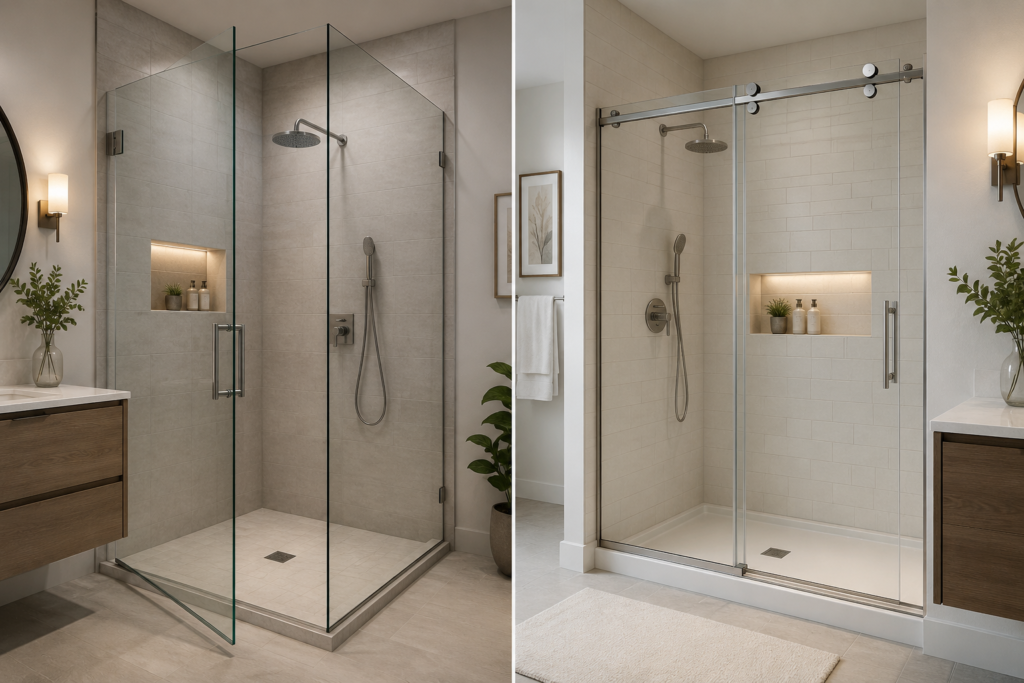
A hinged shower door opens like a traditional door using strong metal hinges attached to a wall or glass panel. It swings outward or inward depending on the installation. This creates a wide and open entry that feels easy and comfortable to use.
A sliding shower door works differently. Instead of swinging, it moves on a track system where glass panels glide horizontally past each other. This eliminates the need for extra space in front of the shower.
The difference may seem simple, but it completely changes how the bathroom feels and functions. Hinged doors offer openness and luxury, while sliding doors focus on space efficiency and practicality.
2. Space Requirements: Small Bathroom vs Spacious Layout
Space is one of the most important factors when choosing between the two.
Hinged doors work best in larger bathrooms where there is enough clearance for the door to swing freely. They create a more open and premium feel but require unused floor space in front of the shower.
Sliding doors are ideal for small or compact bathrooms. Since they don’t swing outward, they save space and allow better movement around sinks, toilets, and storage areas.
For many renovation projects, professionals like M&T Glass often recommend sliding doors for tighter layouts and hinged doors for larger bathrooms where design impact matters more.
3. Style, Design, and Visual Appeal
The visual impact of a shower door plays a huge role in bathroom design.
Hinged shower doors are often chosen for modern, luxury bathrooms. Frameless glass designs create a clean, minimal, and spa-like look that makes the space feel brighter and more open.
Sliding shower doors have a more structured appearance because of the track system. However, modern versions now include frameless and semi-frameless designs that look sleek and contemporary.
If your goal is a high-end, open, hotel-style bathroom, hinged doors usually deliver the strongest visual impact. If you want a practical yet modern look, sliding doors are a great fit.
4. Daily Use and Comfort
How a shower door feels in daily use matters more than most people expect.
Hinged doors provide a wide entry, making it easy to step in and out of the shower. This is especially helpful for families, elderly users, or anyone who prefers more open movement.
Sliding doors are very convenient in tight spaces. They glide smoothly without needing swing clearance, which makes them easy to use in compact or shared bathrooms.
Both options are comfortable, but the right choice depends on how much space you have and how you use your bathroom every day.
5. Cleaning and Maintenance
Maintenance is a major long-term consideration.
Hinged shower doors are easier to clean because they have fewer mechanical parts and no track system. There is less buildup of soap, dirt, or water residue.
Sliding doors require more maintenance since the track can collect grime and water over time. Regular cleaning is important to keep them operating smoothly and looking good.
In many cases, homeowners working with M&T Glass choose hinged doors when they prefer low-maintenance solutions, while sliding doors are chosen for space-saving benefits despite slightly higher upkeep.
6. Durability and Installation Quality
Both hinged and sliding doors are durable when installed correctly, but they rely on different systems.
Hinged doors depend on strong hinges that must support the full weight of the glass. If installed properly, they remain stable and long-lasting.
Sliding doors rely on rollers and tracks. When aligned correctly, they operate smoothly for years, but poor installation can cause sticking or misalignment.
This is why professional installation is essential. Proper fitting ensures safety, durability, and smooth daily use.
7. Cost and Safety Considerations
Cost depends on materials, size, and design style.
Hinged shower doors are often slightly more expensive, especially frameless models with premium hardware and thick glass. Sliding doors can be more affordable at entry level, but high-end systems may cost just as much.
From a safety perspective, both use tempered safety glass, designed to break into small, less harmful pieces if damaged. Sliding doors are often preferred in smaller bathrooms because they don’t swing outward, reducing accidental contact.
Water sealing also differs slightly. Hinged doors usually provide a tighter seal because they close firmly against magnetic strips or rubber seals. This helps reduce water leakage. Sliding doors also manage water well, but because of overlapping panels and track systems, there may be slightly more chance of minor leakage if not installed perfectly.
8. Long-Term Value and Home Appeal
Beyond daily use, shower doors can also influence the value and appeal of a home.
Hinged shower doors are often seen as a premium upgrade. Their clean and modern appearance can enhance bathroom aesthetics and attract future buyers.
Sliding doors are valued for practicality, especially in smaller homes where space-saving design is important.
In many renovation projects, homeowners working with M&T Glass choose based on long-term goals, balancing style, functionality, and resale value, and safety.
At the end of the day, choosing between hinged and sliding shower doors comes down to your space, lifestyle, and design goals. If you want a spacious, elegant, and modern look with easy cleaning, hinged doors are a strong choice. If you need something practical, space-saving, and efficient for a compact bathroom, sliding doors are the smarter solution. Both options can completely transform your bathroom when chosen correctly and installed professionally. That’s why many homeowners trust M&T Glass to guide them through the selection process and deliver high-quality installation that fits both style and function. With the right decision, your shower space won’t just look better—it will feel better every single day.